
Federal contract vehicles are the backbone of government procurement. They help agencies buy faster, smarter, and with less risk. If you’re a vendor, understanding federal contract vehicles is essential.
These vehicles are pre-approved pathways for buying goods and services. They simplify the acquisition process. They also ensure compliance with federal rules.
From GSA Schedules to GWACs and IDIQs, each vehicle serves a unique purpose. Some are open to all vendors. Others are reserved for small businesses or specific industries.
Knowing how federal contract vehicles work can unlock billions in government spending. It can also help you choose the right strategy for bidding and growth.
In this guide, we’ll break down the main types of federal contract vehicles. We’ll explore how they work, who can use them, and why they matter. Whether you’re new to federal contracting or scaling your presence, this is your roadmap to smarter procurement.
What Is a Federal Contract Vehicle?
Definition
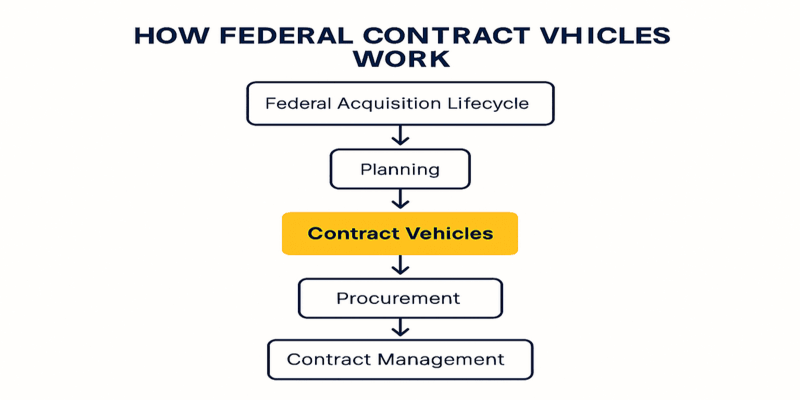
A federal contract vehicle is a pre-approved method for agencies to buy goods and services. It streamlines procurement and ensures compliance with federal rules.
Purpose
Contract vehicles reduce time, cost, and risk in government purchasing. They allow agencies to access vetted vendors quickly.
Role in Procurement
Federal contract vehicles are part of the acquisition strategy. They help agencies meet mission needs while following the Federal Acquisition Regulation (FAR).
Common Examples
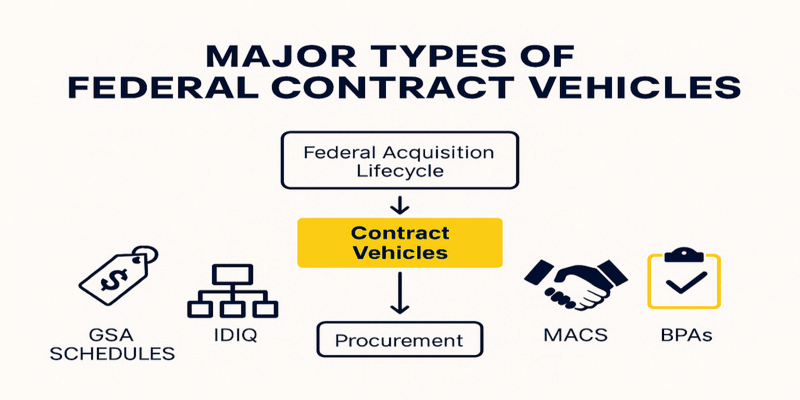
- GSA Schedules: Pre-negotiated catalogs for commercial products.
- IDIQ Contracts: Flexible contracts for undefined quantities.
- GWACs & MACs: Multi-agency vehicles for IT and services.
- BPAs: Streamlined agreements for recurring needs.
Who Uses Them?
- Federal agencies
- Approved vendors
- Small businesses under set-aside programs
Major Types of Federal Contract Vehicles
GSA Schedules
GSA Schedules are long-term government-wide contracts. They offer pre-negotiated pricing for commercial products and services. Vendors must apply and get approved by the General Services Administration.
Key Features
- Open to all federal agencies
- Streamlined buying process
- Ideal for recurring purchases
IDIQ Contracts
IDIQ stands for Indefinite Delivery, Indefinite Quantity. These contracts allow agencies to order as needed, within set limits. They’re flexible and used when exact quantities are unknown.
Key Features
- No fixed volume
- Task orders define scope
- Common in construction and IT
GWACs
Government-Wide Acquisition Contracts (GWACs) are multi-agency vehicles for IT solutions. Managed by agencies like NASA and NIH, they support complex tech needs.
Key Features
- Reserved for IT services
- Pre-competed and vetted vendors
- Examples: SEWP, CIO-SP4
MACs
Multi-Agency Contracts (MACs) are shared across agencies. They cover a wide range of services and products. Agencies pool resources for better pricing and access.
Key Features
- Broad scope
- Used across departments
- Often include small business set-asides
BPAs
Blanket Purchase Agreements (BPAs) simplify repeat purchases. They’re not contracts but agreements to buy from a vendor under set terms.
Key Features
- Fast ordering
- No minimum commitment
- Common for office supplies and services
GWACs vs MACs: Strategic Comparison
What Are GWACs?
GWACs are Government-Wide Acquisition Contracts. They focus on IT services and solutions. Managed by agencies like NASA and NIH, they support complex tech needs.
Key Traits
- Reserved for IT and telecom
- Pre-competed and vetted vendors
- Examples: SEWP, Alliant 2, CIO-SP4
What Are MACs?
MACs are Multi-Agency Contracts. They serve multiple agencies across various sectors. They cover a wide range of products and services.
Key Traits
- Broad scope beyond IT
- Shared access across agencies
- Often include small business set-asides
Strategic Differences
GWACs are specialized. MACs are general. GWACs focus on innovation and tech. MACs offer flexibility across categories.
Use Cases
- GWACs: Cloud migration, cybersecurity, software development
- MACs: Logistics, staffing, facility services
Vendor Impact
GWACs require strong past performance in IT. MACs allow broader entry points. Both offer long-term revenue and visibility.
How Vendors Access Federal Contract Vehicles
Registration
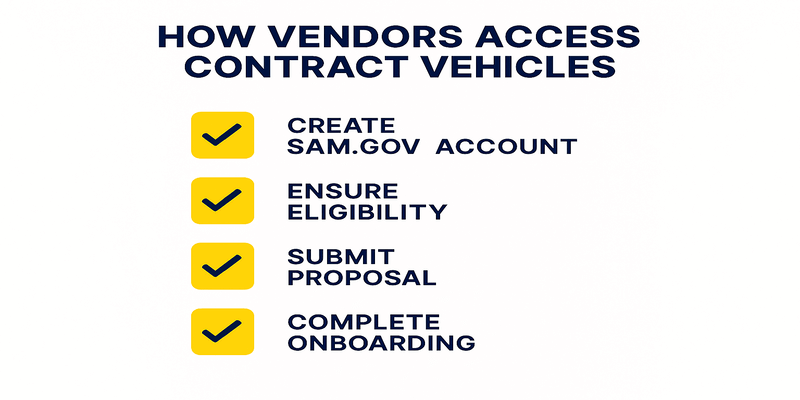
To access federal contract vehicles, vendors must register in SAM.gov. This is the official portal for doing business with the U.S. government.
Key Steps
- Create a SAM.gov account
- Get a Unique Entity ID (UEI)
- Complete entity registration
Eligibility
Each contract vehicle has its own entry criteria. Some require past performance. Others focus on small business status or industry certifications.
Common Requirements
- NAICS code alignment
- Financial stability
- Compliance with FAR and cybersecurity rules
Proposal Process
Vendors must respond to solicitations or Requests for Proposals (RFPs). These outline scope, pricing, and technical requirements.
Tips for Success
- Read the Statement of Work (SOW) carefully
- Highlight relevant experience
- Offer competitive, compliant pricing
Onboarding
Once awarded, vendors go through onboarding. This includes contract signing, system integration, and compliance checks.
Final Steps
- Accept terms in the contract vehicle portal
- Set up invoicing and reporting systems
- Prepare for audits and performance reviews
Contract Vehicles and Compliance
FAR Regulations
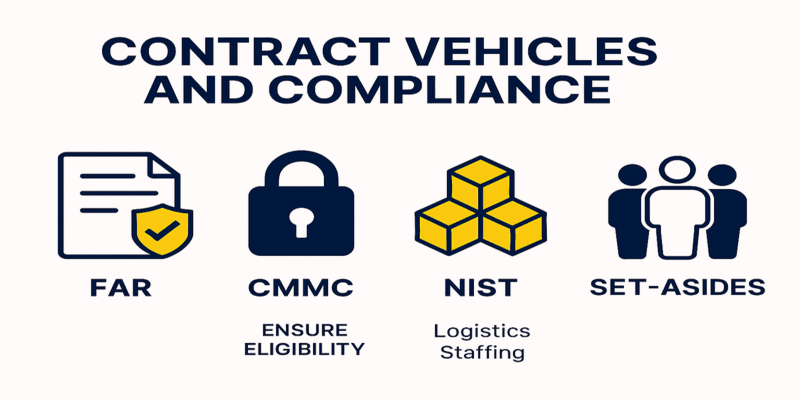
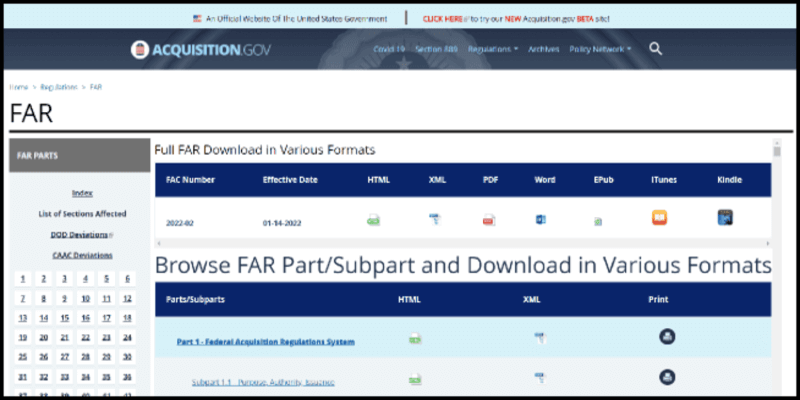
Federal contract vehicles must follow the Federal Acquisition Regulation (FAR). FAR ensures transparency, fairness, and legal compliance in all government purchases.
Key Parts
- FAR Part 8: GSA Schedules and simplified acquisitions
- FAR Part 16: Contract types and pricing structures
Socioeconomic Set-Asides
Some vehicles include set-asides for small businesses, women-owned firms, and veteran-owned companies. These promote equity in federal spending.
Examples
- 8(a) Business Development Program
- HUBZone contracts
- Service-Disabled Veteran-Owned Small Business (SDVOSB)
Cybersecurity Rules
Vendors must meet strict cybersecurity standards. This protects federal data and systems.
Key Frameworks
- NIST 800-171: For handling controlled unclassified information
- CMMC: Cybersecurity Maturity Model Certification (for DoD contracts)
Supply Chain Integrity
Agencies require vendors to disclose sources and avoid banned suppliers. This ensures ethical and secure procurement.
Compliance Tools
- SAM.gov exclusions list
- Section 889 restrictions on telecom equipment
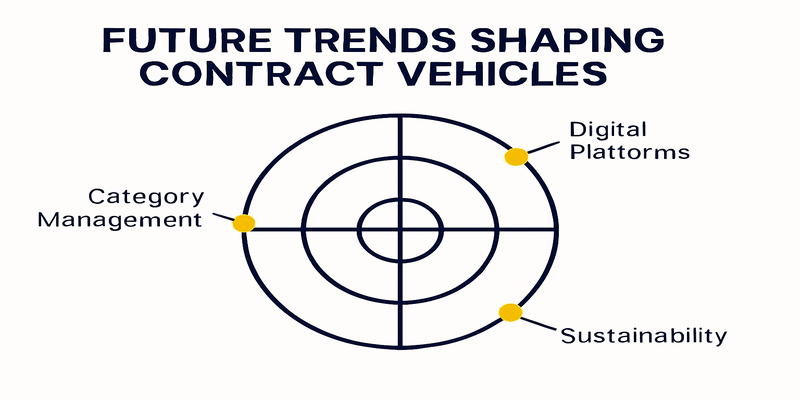
Future Trends Shaping Federal Contract Vehicles
Rise of Category Management
Federal agencies are shifting toward category management. This strategy groups similar purchases to reduce costs and improve efficiency. Contract vehicles are being aligned with category goals to streamline buying.
What It Means
- Fewer duplicative contracts
- More strategic sourcing
- Better vendor performance tracking
Digital Procurement Platforms
Tools like GSA eBuy, SAM.gov, and Acquisition Gateway are transforming how agencies access contract vehicles. These platforms offer faster searches, automated workflows, and real-time updates.
Key Benefits
- Easier vendor discovery
- Transparent bidding processes
- Centralized contract data
Emphasis on Equity and Sustainability
New policies are pushing agencies to use contract vehicles that support diversity, equity, and sustainability. This includes set-asides for underserved businesses and green procurement goals.
Emerging Priorities
- Climate-conscious sourcing
- Support for minority-owned vendors
- Ethical supply chain standards
Agile and Modular Contracting
Agencies are adopting agile acquisition models. This means using flexible contract vehicles for evolving needs, especially in IT and innovation sectors.
Examples
- Modular contracting for software development
- Agile task orders under IDIQs
- Performance-based incentives
Conclusion & Resources for Federal Contract Vehicles
Final Takeaways
Federal contract vehicles are more than procurement tools—they’re strategic gateways to government spending. From GSA Schedules to GWACs and MACs, each vehicle offers unique advantages for agencies and vendors alike.
Understanding how these vehicles work helps vendors position themselves for long-term success. It also empowers agencies to buy smarter, faster, and with greater accountability.
Where to Learn More
To explore federal contract vehicles in depth, start with these trusted resources:
Key Platforms
- SAM.gov: Register, search opportunities, and track awards
- GSA eLibrary: Browse GSA Schedule offerings
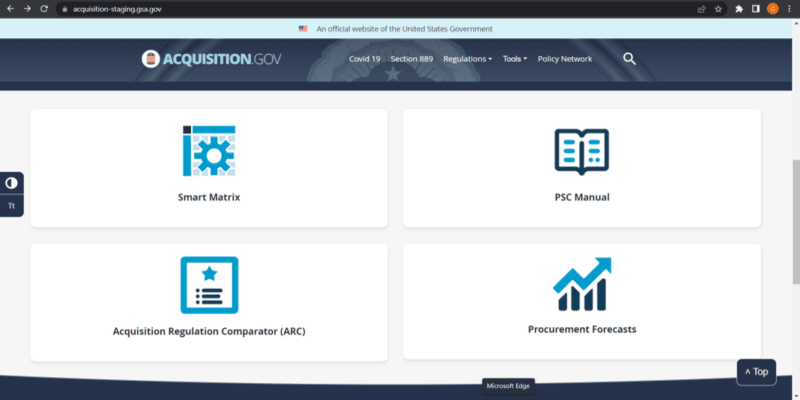
- Acquisition.gov: Access the full FAR and procurement policy
- NASA SEWP: Learn about GWACs for IT solutions
Your Next Step
Whether you’re a small business or an established vendor, now is the time to explore contract vehicles that align with your strengths. Stay informed, stay compliant, and stay ready to compete.