
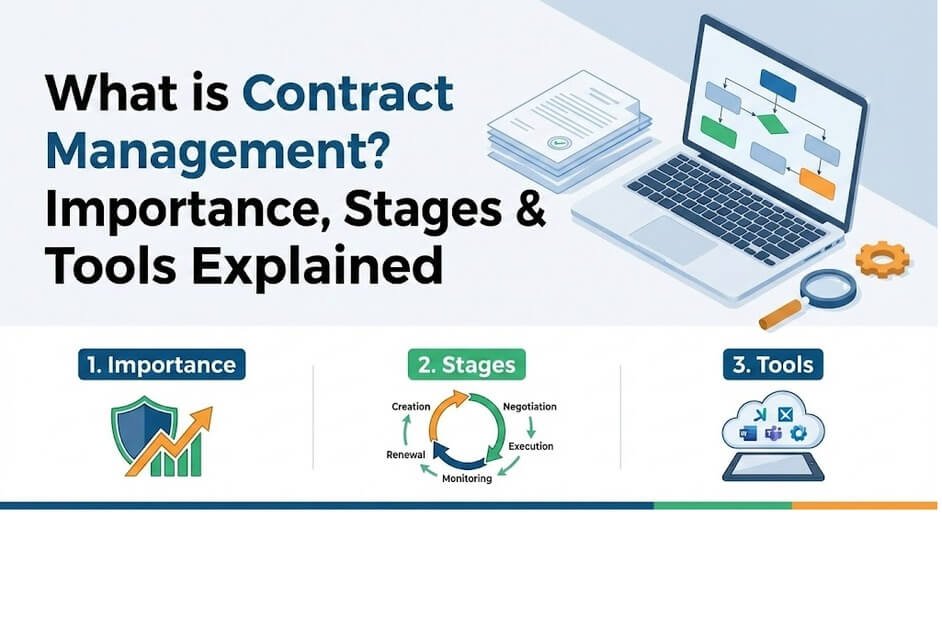
A business runs on policy driven agreements and to ensure a successful deal, all policies must be managed properly.
The process of creating, organizing, tracking and handling deals/agreements between two or more parties is known as contract management. It ensures that all the parties involved fulfill the policies stated in the contract.
This process involves drafting agreement, getting approval, monitoring performance and renewal/termination of the contract.
In this article, you will learn what contract management is, why it is important for your business, what risks you can avoid and ensure the overall improvement of your contract.
5 Importance Of Contract Management
Financial Control
Contract management helps companies to maintain financial control. It clearly provides the definition of pricing, schedule of payments, penalties and financial responsibilities.
Companies may make improper payments or fail to recognize billing mistakes in cases of poor monitoring of contracts. This can cause disruptions in budgeting and planning of cash flow.
Planned contract management makes sure that every financial term is correctly abided as per the agreement. This results in better transparency, reduces transaction confusion, and helps businesses to track precise expenditure which eventually leads to better stability and financial planning.
Legal Protection
Contracts are legally binding documents that provide definitions of rights and obligations. Improper contract management can create misunderstanding or violations of legal terms.
Many times, it can result in disputes, lawsuits and even financial penalties. Proper contract management makes sure that agreements abide by current laws and internal guidelines. Additionally, it also ensures documentation to be organized and accessible in cases of legal review.
Risk Reduction
In every contract, risk evaluation is an important subject.
For example, the risks include missed deadlines, non-performance, or non-compliance with policies. These risks can turn into significant problems if proper monitoring is not present.
Contract management recognizes possible risks early and allows businesses to take necessary actions. It tracks performance and makes responsibilities clear. This decreases uncertainty and prevents operational and financial losses in businesses.
Operational Efficiency
Timelines, quality standards and service requirements are an essential part of contracts. These aspects have to be strictly taken care of in order to ensure smooth running of daily operations.
Correct contract management makes sure that work is completed on time and in accordance with agreed standards. This regulates coordination between departments and partners.
Tackling contracts effectively decreases delays, confusion, and wasted efforts which enables organizations to operate more efficiently.
Performance Monitoring
Performance monitoring makes sure that all parties fulfill their contractual obligations. Companies track deadlines, deliverables and levels of services. Below expectation performance can immediately raise questions.
Proper regular reviews help in the maintenance of accountability and improvement of future agreements. Unmonitored contracts may make poor performance unnoticed leading to decreased quality and financial losses.
10 Key Stages of Contract Management
1. Contract Initiation
Contract initiation is the stage where the need of the contract is identified and objectives, scope, and stakeholders are defined. Requirements are documented, budgets are estimated, and risk assessments are conducted.
Clear planning during initiation prevents confusion later in the process. Organizations determine what goods or services are required and outline expectations before drafting begins.
2. Internal Review and Risk Assessment
Internal review is a crucial part in contract management.
Before finalizing the draft with the client, internal review must be done. This includes legal department review, financial analysis, risk management assessment and compliance verification. In this process, possible risks are identified and eliminated.
For instance, liability clauses are checked, penalty terms are evaluated, and regulatory compliance is verified. This step makes sure that the company does not reveal itself to legal or financial risks.
4. Negotiation
After ensuring internal review, the draft should be shared with the client for negotiation. Negotiation is an important, essential step where both parties bargain, discuss and change terms, if needed and attempt to reach a mutual agreement.
Both parties review conditions to ensure fairness and compliance. Effective negotiation balances risk and value while protecting interests. Clear and precise language reduces ambiguity and future disputes.
Some examples of negotiations are pricing adjustments, delivery timelines, performance metrics and risk allocation, warranty terms and payment schedules.
5. Process of Approval
After successful negotiation from both sides, the next step is to ensure formal approval processes.
The procedure might vary according to a company, but usually it is based on some key aspects. For example, senior level management approval, legal sign-off, financial authorization and board approval(for large contracts).
If approval is clear and transparent, then workflows are easier, delays are reduced and unauthorized commitments are prevented.
6. Contract Execution and Implementation
After the approval phase, the contract is executed.
Usually, the authorized representatives from both sides formally sign the contract and thus confirm the execution of the contract.
After the signing process, the contract is considered to be legally bound. Copies of the contract must be safely kept or recorded in a centralized repository for future reference.
7. Contract Registration and Documentation
Correct documentation must be ensured in contract management. The contract should be registered in the organisation’s contract database, assigned a unique reference number, categorized by type and department and kept safely.
Ensuring this process makes access, tracking and auditing easier. A proper contract register assists in monitoring renewal dates and compliance deadlines.
8. Implementation and Communication
Next, the contract moves into the stage of implementation. During this process, relevant teams are informed about contractual obligations, deliverables and timelines are communicated and maintained, performance metrics are determined, duties are assigned.
Effective communication makes sure that all the stakeholders know their roles and responsibilities regarding the contract.
9. Performance Monitoring and Compliance Management
Performance monitoring is an important stage of contract management. This means that both sides ensure that they will maintain their obligations in accordance to the contract terms.
Activities such as deliverables tracking, performance reports reviewing, service level agreement measures, payment schedules verification, and audit conducting must be checked thoroughly.
10. Renewal or Termination
The last stage is renewal or termination of the contract. As the contract approaches expiration, performance is evaluated. The organization decides whether to renew, renegotiate, or terminate the agreement.
Careful evaluation at this stage helps avoid unwanted auto-renewals and ensures continued value from partnerships.
Software Tools You need to Use in Contract Management
Contract Lifecycle Management Software
Contract Lifecycle Management (CLM) regulates the whole contract process starting from drafting to renewal. These tools focus on document storage, streamline approval workflows, and provide real-time tracking of obligations and deadlines. Automated alerts reduce missed renewals and compliance failures.
CLM software helps to improve visibility, decreases manual errors, and intensifies collaboration across departments which makes contract management more efficient and data-driven.
E-Signature and Digital Documentation Tools
E-signature platforms create safe, legally bound electronic signatures increasing contract execution.
Digital documentation systems keep agreements in searchable repositories, bettering accessibility and audit readiness.
These tools decrease paperwork, eliminates delays caused by physical signatures and increases document security. They also maintain version control, making sure that teams can always access the most updated copy of the contract.
Analytics and Reporting Tools
Advanced contract management platforms include analytics dashboards that provide information about contract performance, spending patterns, and risk exposure. These tools help companies recognize cost-saving chances and identify inefficiencies.
Data-driven reporting aligns with strategic decision-making and deepens compliance monitoring. Analytics increase transparency and permit leadership to understand the overall effectiveness of contract portfolios.
Who Needs Contract Management?
1.Government Agencies
Government organizations manage large contracts for roads, buildings, defense, healthcare, and other public services. They must follow strict rules and stay transparent during the contracts.
Good contract management helps them stay organized, avoid corruption, and make sure taxpayer money is spent properly. It also helps to maintain public trust.
2. Corporate Organizations
Private companies use contracts for suppliers, employees, customers, and service providers. Managing these contracts properly helps companies control costs and reduce legal problems.
Good contract management helps companies stay organized and run their operations smoothly. It also ensures that business goals match what is written in agreements.
3. Procurement and Supply Chain Teams
Procurement teams handle supplier contracts and negotiate prices and terms.
Contract management helps them keep track of delivery dates, costs, and quality standards. This ensures suppliers meet expectations.
When contracts are managed well, the supply chain runs without delays, and business operations continue smoothly.
4. Legal Departments
Legal teams review contracts to make sure they follow the law and company policies. They also manage disputes if problems arise.
Organized contract records make it easier to find information quickly. This reduces confusion and helps companies manage risks more effectively.
5. Small and Medium Enterprises (SMEs)
Small businesses may not have large legal teams, but they still depend on contracts.
Good contract management helps them avoid payment problems, protect their ideas, and prevent misunderstandings. It also helps them build a professional image and grow their business safely over time.
Conclusion
Contract management is an important process for businesses of all sizes. It ensures agreements are clear, followed properly, and monitored carefully.
By managing contracts effectively and using digital tools, organizations can reduce risks, avoid financial losses, and improve performance.
Whether in government or private companies, contract management supports smooth operations and long-term success. In today’s competitive world, managing contracts properly is essential for business stability and growth.
Frequently Asked Questions (FAQs) About Contract Management
What types of agreements require contract management?
Any agreement that includes obligations, deadlines, or payments requires contract management. This includes vendor agreements, service contracts, employment agreements, leases, and partnership deals to ensure responsibilities are fulfilled.
When should contract management begin?
Contract management should begin before the contract is signed. Early planning, risk review, and approval workflows help prevent issues and ensure smooth execution after signing.
How does contract management support compliance requirements?
Contract management helps ensure agreements follow laws, regulations, and company policies. Proper documentation and tracking make audits easier and reduce compliance risks.
Who is responsible for managing contracts within an organization?
Contract management responsibility is usually shared across departments. Legal teams, procurement staff, finance teams, and project managers each oversee different aspects of contract compliance and performance.
What risks can arise from unmanaged contracts?
Unmanaged contracts can lead to missed obligations and business disruptions. They may cause compliance violations, service failures, unexpected expenses, and strained relationships.
How does contract management improve teamwork and coordination?
Contract management improves coordination by clearly defining roles and responsibilities. This helps departments and partners stay aligned with deadlines, deliverables, and expectations.
What is the purpose of reviewing contracts before renewal?
Reviewing contracts before renewal helps determine whether the agreement still delivers value. Organizations can renegotiate better terms, improve conditions, or end agreements that no longer meet business needs.
How do digital tools improve contract control and visibility?
Digital tools improve control by centralizing contract records and tracking deadlines automatically. Alerts, searchable storage, and real-time access help teams stay organized and avoid missed obligations.
Is contract management necessary for small businesses?
Yes, contract management is essential even for small businesses. It helps prevent disputes, ensures clear payment terms, and supports professional and secure business operations.