

GSA Turns Up the Heat on Strategy Consulting Firms!
The General Services Administration is once again making waves in the consulting world and this time, it’s targeting the big players. In a letter dated Thursday, GSA reached out to six heavyweight firms in the strategy consulting space which are AlixPartners, Alvarez & Marsal Federal, Boston Consulting Group, Ernst & Young (EY), FTI Consulting, and McKinsey & Co. with a not-so-subtle request which means “ Prove your worth or prepare to be cut”.
This is part of GSA’s ongoing effort to rein in federal spending on outside consulting and push agencies toward more cost-effective, accountable solutions. The directive? These firms must submit a breakdown of their federal contracts and offer up ideas for how to restructure those engagements to create real, measurable value for taxpayers. The deadline is July 11, and the expectations are high.
In his letter, Josh Gruenbaum, commissioner of GSA’s Federal Acquisition Service, makes it clear that this is more than a routine audit. It’s a full-scale value assessment. Gruenbaum notes that, in keeping with the administration’s push for fiscal responsibility, the GSA is operating under a bold assumption: that most of these consulting contracts are not essential to core agency missions. GSA is calling for a fundamental shift, one that moves away from traditional time-and-materials billing toward contracts that focus on performance and outcomes. Think: shared savings models and deliverables-based payment structures. In short, GSA wants contractors to have some skin in the game. If a consulting firm can’t show how its work leads to clear, quantifiable returns, it may find its contract restructured or revoked altogether.
The tone of this review is firm but not without opportunity. Gruenbaum is asking firms to lay out their plans and justify any contracts that, in their view, can’t transition to outcome-based pricing. But there’s no room for fluff as responses must be written in plain language, backed by logic, and focused on results.
This new round of reviews adds to a growing list of consulting and IT resellers already under GSA scrutiny. And it’s producing real results. GSA estimates that $23.3 billion in savings have already been realized through canceled or restructured contracts.
So what does this mean for the industry? The era of comfortable, open-ended government consulting deals may be drawing to a close. Firms will need to double down on proving their ROI, tightening their pricing models, and aligning their services with actual agency needs.
The message from GSA is clear: adapt or get left behind. If you’re not driving outcomes, delivering value, or justifying your existence , you’re on the chopping block. And this time, even the biggest names aren’t safe.
📜 COMPLIANCE AND REGULATION UPDATES

The General Services Administration (GSA) is turning up the heat on consulting contracts, targeting firms like AlixPartners, Ernst & Young, and McKinsey & Co. By July 11, these companies must deliver detailed consulting contracts breakdowns, showcasing cost savings and taxpayer value.
GSA’s Federal Acquisition Service Commissioner, Josh Gruenbaum, is pushing for outcome-based pricing and shared-savings models, demanding firms show “skin in the game.” With $23.3 billion saved through consulting contracts terminations, the stakes are high. Contractors must use plain language, prioritize quantifiable deliverables, and align with fiscal responsibility in consulting contracts. Non-compliance risks contract internalization or termination. To succeed in consulting contracts, firms must adapt swiftly, justifying every dollar and embracing innovative pricing. Compliance isn’t optional—it’s the cornerstone of thriving in consulting contracts. Stay proactive, transparent, and ready to prove your worth to secure your place in this evolving landscape!
Task Order Protest Denied
In a recent procurement dispute, Brandan Enterprises, Inc. (BEI), a small business from Knoxville, Tennessee, protested the Army’s issuance of a task order to Quality Innovation, Inc. for visitor operations services at Arlington National Cemetery under RFP No. W15QKN-24-R-0099. BEI challenged the procurement process, alleging flawed discussions, improper evaluation of its proposal, and an erroneous best-value tradeoff decision in the procurement. BEI argued its proposal addressed pre-shift and post-shift tasks by offering excess labor hours, claiming the assessed weakness was “unjustified.” However, the procurement record showed evaluators reasonably found BEI’s staffing plan insufficient, lacking provisions for required tasks, warranting a significant weakness. BEI’s methodology, unchanged from its proposal, failed to demonstrate error in the procurement evaluation. The best-value tradeoff challenge, derivative of the procurement evaluation, was dismissed. The protest was denied, affirming the Army’s procurement judgment in this complex federal contracting case.
🔓 Start with 8(a) Business Development Program!
Imagine a young sapling pushed by wind on a barren hill, roots searching for a firm hold, leaves craving sunlight. A passing gardener cups the stem and brings water. The sapling straightens and grows strong through patient care. This simple act mirrors the aim of the 8(a) business development programme, giving small firms a vital boost.

The 8(a) business development programme began in 1978 under Section 8(a) of the Small Business Act to help socially and economically disadvantaged firms compete in federal markets. It lasts nine years for each firm, with a four-year development stage followed by a five-year transitional stage. Participants get one-to-one help from business opportunity specialists. They learn to write proposals, manage finances, and comply with regulations.
Firms that join get access to set-aside and sole-source contracts. A typical sole-source award can reach 4.5 million dollars for most contracts, and 7 million dollars for manufacturing work. Entity-owned participants can go beyond those caps with extra approvals. Members may also receive free training through the Empower to Grow programme. They can join mentor protégé arrangements with seasoned contractors to boost capacity.
To qualify a business must be small under SBA rules, at least 51 percent owned and controlled by U.S. citizens who are socially and economically disadvantaged, have a net worth of eight hundred fifty thousand dollars or less, adjusted gross income of four hundred thousand dollars or less, and assets of six point five million dollars or less. Owners must show good character and at least two years of business history. They must apply only once in their lifetime unless owned by an Alaska Native corporation or similar entity.
In 2019, firms in this programme won 30.4 billion dollars in federal contracts, including set aside and sole-source awards of 8.6 billion and 9.9 billion dollars, respectively. A Washington Post article in May 2024 highlighted one firm that won a seven-million-dollar contract to fix bridges in rural areas, crediting 8(a) certification with opening doors. The New York Times in June 2025 ran a feature on a small software firm that grew from two employees to twenty through careful use of 8(a) set-aside work.
On June 27, 202,5, SBA Administrator Kelly Loeffler ordered a full-scale audit after a Justice Department probe uncovered fraud in the programme. She said, “We must hold both contracting officers and 8(a) participants accountable, and start rewarding merit instead of those who game the system”. Her office will review high-value and limited competition contracts over the last fifteen years.
Starting with this programme means crafting a clear business plan. First, collect financial statements and proof of disadvantage. Next, build a team to track solicitations and write winning bids. Then, schedule regular meetings with your business opportunity specialist. Use mentor protégé matches to learn best practices in project delivery. Aim to hit non-8(a) revenue targets in later years to prove viability.
The road can seem steep for new firms facing big agencies. Yet with steady support and training, the climb is possible. The 8(a) programme offers tools, not guarantees. Success depends on planning, persistence, and ethical conduct. Much like a seedling that becomes a tree, a small firm can take root and thrive with the right care.
💰 BAE Systems Takes Off with $40.8M Navy Countermeasures Deal!
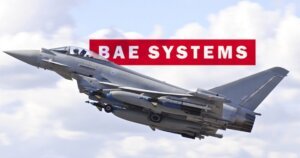
BAE Systems just scored a high-impact win with a freshly inked $40.86 million contract modification that pushes its defense portfolio even higher into the stratosphere. The award, issued by the Naval Air Systems Command, will support the production of 200 Dual Band Decoy countermeasures which is a highly sophisticated suite of tools designed to mislead and deflect enemy radar and missile threats from Navy aircraft.
This isn’t just about adding another tool to the Navy’s defense kit; the Dual Band Decoy is a game-changer in modern aerial warfare. These decoys act as airborne bodyguards, mimicking aircraft signatures and drawing away incoming threats. In an era where digital warfare is evolving rapidly, this technology gives U.S. pilots a critical edge and BAE is right at the center of that innovation.The contract isn’t just technically impressive but it’s operationally and economically impactful, too. With work spanning across eight states including New Hampshire, California, and Washington, this deal supports a diverse supply chain, skilled manufacturing jobs, and BAE’s deep-rooted presence in the U.S. defense industrial base. The cost-plus-incentive-fee and firm-fixed-price structure also incentivizes performance, efficiency, and on-time delivery.Perhaps most notably, this was a competitive procurement, and BAE emerged as the winner , reaffirming its reputation for delivering both quality and value. The Navy isn’t handing out contracts on legacy alone; BAE won this deal by showing it could meet mission-critical needs better than its competitors.
With over $40.8 million already obligated and work stretching into late 2027, this isn’t just a short-term win , actually it’s a strategic partnership for the future. It sends a strong message: when it comes to protecting warfighters with smart, next-gen solutions, BAE is leading it.
Whether you’re tracking key contract wins, analyzing defense tech, or simply watching the aerospace battlefield evolve , this award deserves your attention. BAE isn’t just building decoys. They’re building the future of aerial defense dominance.
📢 Want to be featured in our next issue? [Submit Your Win Here]
🗣️ UPCOMING EVENTS
Event: Social Media Success Made Simple – Build Your Brand, Grow Your Business
Date: Jul 24, 2025
Event: What GovCons Need to Know About ITAR & Protecting Export-Controlled Data
Date: Jul 24, 2025


