
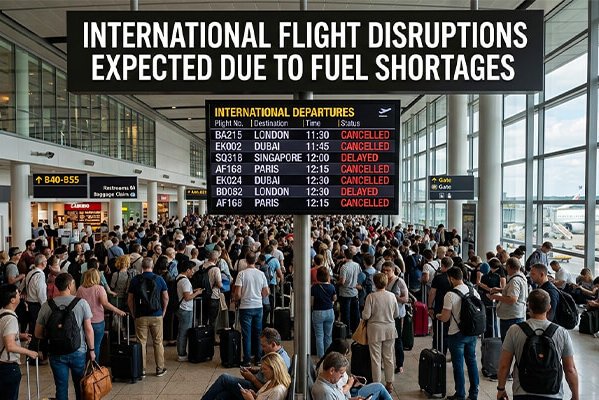
A growing jet fuel shortage is being driven by escalating geopolitical tensions in the Middle East, particularly involving Iran. A key issue is the disruption of oil shipments through the Strait of Hormuz, a critical global energy route. This passage typically handles a significant portion of the world’s oil supply, and any blockage severely affects fuel availability worldwide.
As a result, global energy markets have become unstable, with reduced oil flows and rising uncertainty. The disruption has already impacted refining and transportation systems, limiting the supply of jet fuel to major regions, especially Europe.
Europe Faces Immediate Fuel Shortage Risks
Europe is particularly vulnerable because it depends heavily on imported jet fuel, with a large share coming from the Middle East. Experts warn that the region may have only a few weeks of jet fuel supply left, raising concerns about imminent disruptions to aviation.
Airports typically store limited fuel reserves, making them highly sensitive to supply chain interruptions. Industry groups have warned that shortages could begin affecting operations within weeks, especially during the peak summer travel season.
Although there is no full-scale shortage yet, officials are closely monitoring the situation and preparing contingency plans to prevent a crisis.
Airlines Brace for Flight Disruptions
Airlines across Europe and beyond are already feeling the effects. Rising fuel prices, driven by supply constraints, are increasing operational costs significantly. Some carriers have begun adjusting schedules, reducing routes, or preparing for potential cancellations.
Low-cost airline EasyJet, for example, has warned of higher financial losses due to increased fuel expenses and weaker travel demand in affected regions.
There are also signs of changing travel patterns. Travelers are avoiding destinations closer to conflict zones and shifting toward safer regions, such as Western Europe. This shift is further complicating airline planning and revenue forecasts.
If the situation worsens, widespread flight cancellations and delays could occur during the busy summer travel season, affecting millions of passengers.
Governments and EU Plan
In response to the growing crisis, European authorities are working on emergency strategies to stabilize fuel supply. Proposed measures include optimizing refinery production, coordinating fuel distribution across countries, and improving monitoring systems.
There is also discussion of joint fuel purchasing among EU nations to better manage limited resources. However, experts caution that alternative suppliers from regions like the U.S. or Africa may not be able to fully replace lost Middle Eastern supply in the short term.
The effectiveness of these measures will depend heavily on how long the geopolitical conflict continues and whether normal oil flows can resume.
Broader Economic
The jet fuel shortage is part of a larger global energy crisis. Oil prices have surged sharply, with some physical markets experiencing dramatic increases due to limited supply.
This has wider economic consequences, including inflation, increased transportation costs, and pressure on global trade. The aviation sector is particularly exposed, but other industries dependent on fuel are also affected.
If disruptions persist, the crisis could slow economic growth and create long-term instability in global energy markets.
Outlook for Summer Travel
Looking ahead, the outlook for summer travel remains uncertain. If fuel supplies stabilize, the impact may be limited to higher ticket prices and minor disruptions. However, if shortages worsen, travelers could face significant delays, cancellations, and reduced flight availability.
Airlines, governments, and energy agencies are all working to prevent the worst-case scenario, but much depends on geopolitical developments in the coming weeks.
The jet fuel shortage is a rapidly evolving crisis driven by geopolitical conflict, with Europe at the center of the risk. While emergency measures are underway, the situation could significantly disrupt global air travel and economic stability if not resolved soon.